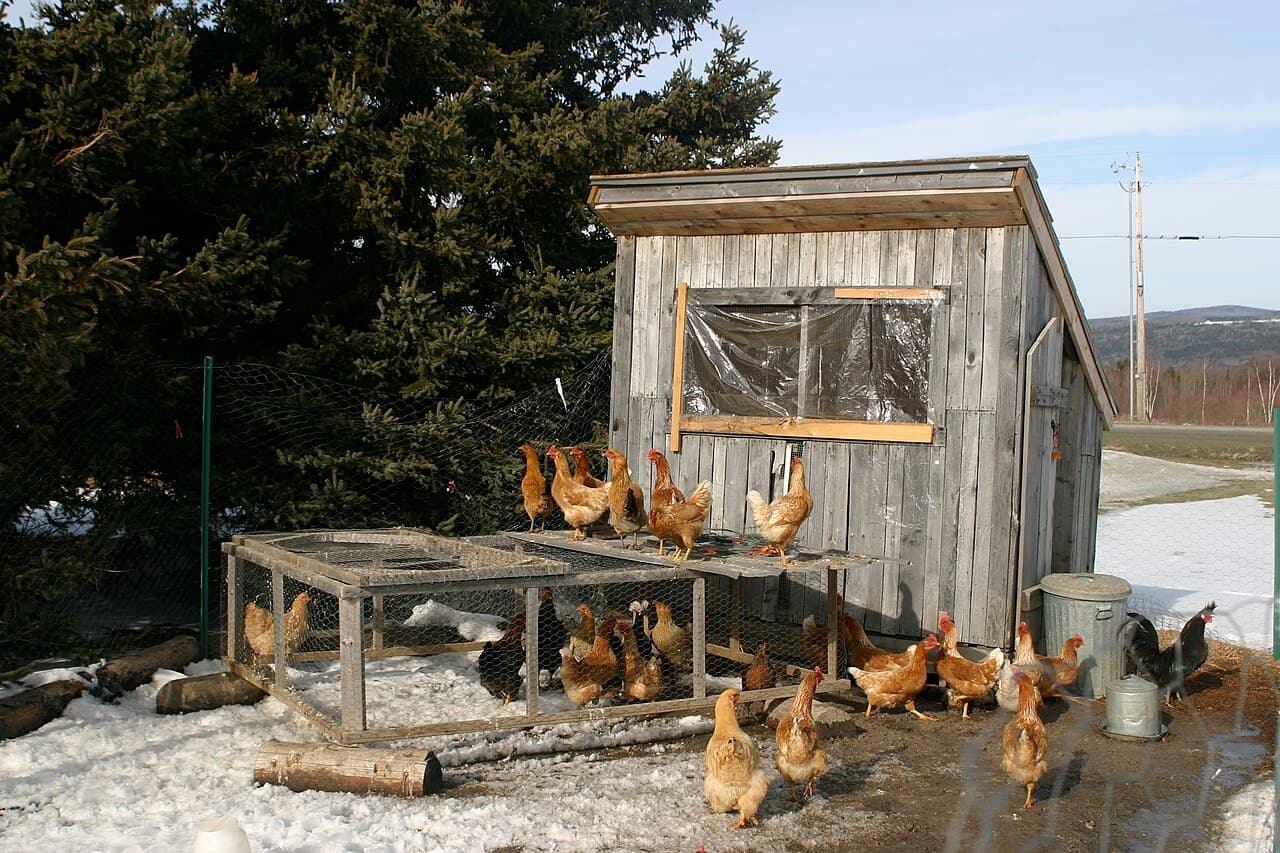
Nobody wants to discover the coop math after the hens are already living in it. But here is the quiet, easy-to-miss truth about the chicken world: most coops that get bought end up too small for the flock they are asked to hold. It is not that anyone is being careless, because on the surface “how big should a coop be” sounds like a simple question. The trick is that it is not one number, it is four of them, and a single wrong guess can turn a cheerful backyard into a crowded, feather-picking misery by the time February rolls around.
The good news is that the math is not hard. You just have to do it before you build or buy. Get it locked in now, and the coop you end up with will still feel right three years from now.
Four Spaces, Four Numbers
A chicken's day has four different rooms in it, and each one needs its own amount of floor space. Here is what to plan for.
1. The coop itself — where they sleep, lay, and roost
The standard rule of thumb is four square feet per standard hen inside the coop. A full-size hen like a Rhode Island Red or a Barred Rock needs about four square feet to sleep, sit on a roost bar, and lay without feeling crowded. Give her less than that and you are buying yourself pecking-order issues and extra cold-weather stress.
- Standard hens need four square feet each, and I will not talk you below that number.
- Bantam hens, the smaller ones, do fine on two to three square feet each.
- Heavy breeds like the Brahma or Jersey Giant want five to six square feet each.
That is the inside floor space where they roost. It does not include the run.
2. The run — the outdoor space where they actually burn energy
The run should give each standard hen eight to ten square feet, which is roughly twice what the coop needs. A run that comes up small is the single biggest cause of feather-pecking, bullied hens, and floors that turn into mud pie. If your hens free-range most of the day and only stay in the run overnight, you can aim toward the lower end; if they live in the run, give them the full ten.
3. The roosting bar — flat inches, not square feet
Each hen needs about eight to ten inches of roost-bar perch so the whole flock can sleep up there without stacking on top of each other like parade tumblers.
4. Nest boxes — a shared basis, not one per chicken
One box per three to four hens is plenty, because at night the hens roost together and only use the boxes to lay. Four birds really do not need four separate boxes.
Let the Calculator Do the Tape-Measure Work
This is exactly the kind of thing people overthink while hunched over a tape measure in the backyard. So I built a coop size calculator that takes the guesswork out of it. You pick how many hens you have, what size your breed is, and whether they free-range, and it tells you the minimum square footage for the coop, the run, and the roost bar length in under a minute.
Let's Run a Real Example
Say you want six standard hens and you free-range them most afternoons. Your numbers look like this:
- Inside the coop, you need six hens times four square feet per hen, which comes to twenty-four square feet, or roughly a four by six foot floor.
- For the run, six hens times eight to ten square feet each gives you forty-eight to sixty square feet, so a six by ten or six by eight footprint.
- The roost bar needs six hens times ten inches each, or about five feet of bar.
- And you would want one nest box for every three birds, which means two boxes.
Here is where people get burned with the coops you find at big-box stores. A model will boast that it holds six to eight chickens, but its real footprint is smaller than twenty-four square feet of actual roosting floor, because the marketing math counts the run as coop room. Now you know the trick, so check the interior floor dimensions minus roosting loft, not the exterior label.
The “Adding One More” Trap
The quiet killer is that flock size grows faster than the coop does. You start with four birds, then one more for variety, and before you know it you have crowded it to a coop that was sized for four. By February you have a flock issue on your hands and nobody is happy.
So the smarter move is to build for the maximum flock you might ever want, then actually stock it a little below that maximum. A bit of extra interior space is not wasted. It is the difference between a flock that merely tolerates each other and a flock that gets along like actual neighbors.
The One-Line Summary
- Inside the coop, plan four square feet per standard hen, two to three per bantam, and five to six for the big breeds.
- The run needs eight to ten square feet per hen.
- Give each hen ten inches of roost bar and one nest box per three to four birds.
- Buy for the flock you might eventually want, and stock for the flock you actually have.
If you would rather buy than build, a properly sized kit coop takes the measuring out of it entirely — just match the listed floor space to the numbers above.
Run your exact numbers through the coop calculator and you will never be the neighbor with the too-small coop again. And once the coop is right, size the flock for your egg goals with the flock planner so you are not feeding more birds than you need.
Disclosure: this post contains affiliate links; we may earn a commission at no cost to you.