
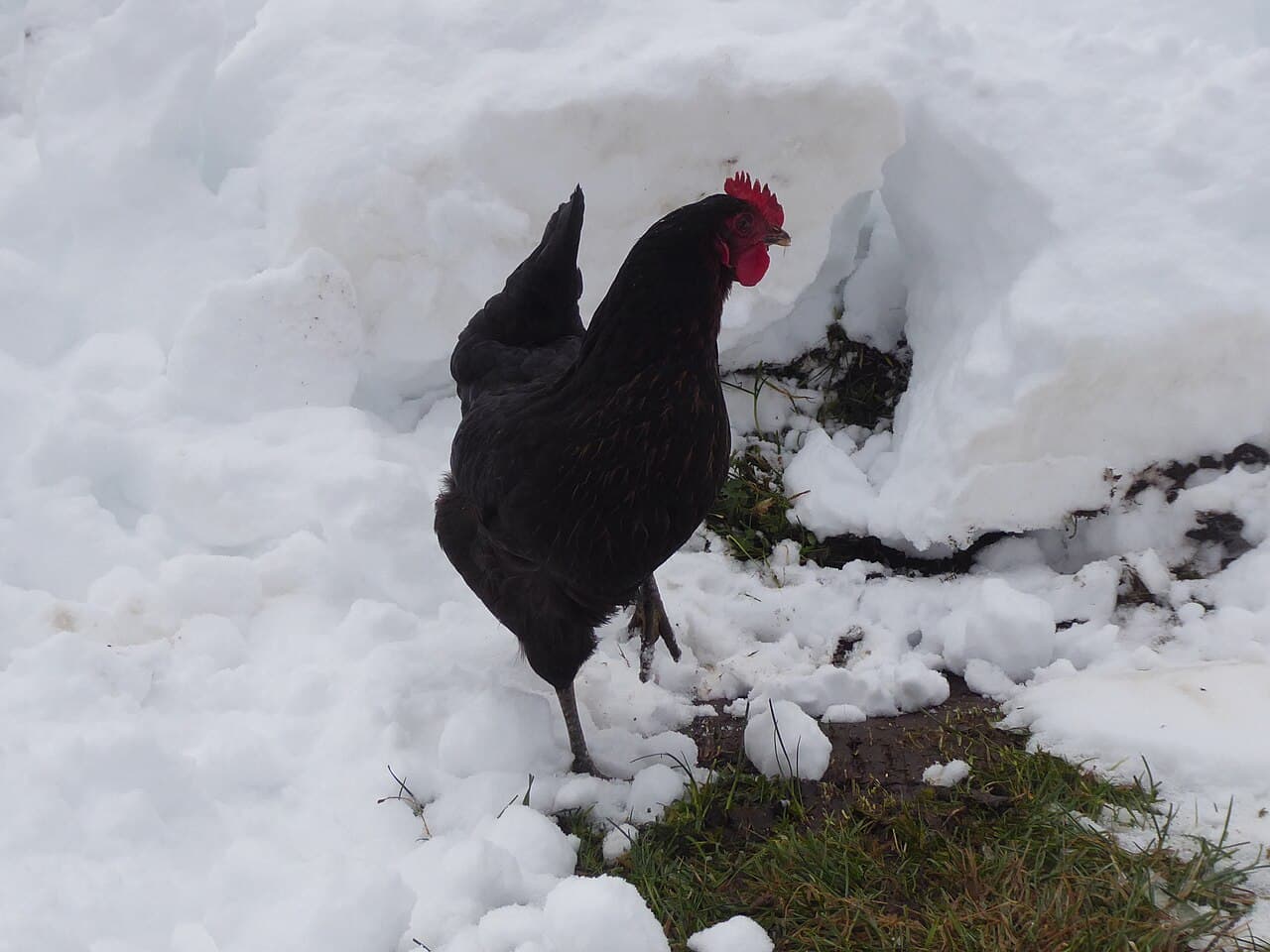

Chickens handle cold far better than most people think — they're literally wearing down jackets. What kills flocks in winter isn't the temperature. It's drafts, moisture, and coops that were never built for the season.
I keep coming back to something my own flock taught me a few winters back. The girls don't mind the cold. What they mind is the damp — a coop that sweats overnight, a draft they can't get away from at roost height. Fix those two things and healthy, feathered hens will sail through January. Ignore them and you'll be out at 6 a.m. breaking ice and worrying about frostbitten combs. This is the stuff people mean when they say "winterizing," and it's why the coop you buy matters more than the calendar.
There's history under this too. During the war years, keeping a "Victory Flock" in the backyard was actively encouraged — eggs and meat were needed, and families answered by keeping hens within walking distance of the kitchen. The famous Depression-era "egg money" tradition was the same impulse: a family flock whose eggs paid for groceries, clothing, and sometimes the kids' piano lessons. Chickens have been the quiet workhorse of the American home for a century. A coop that survives winter is what kept that possible.
The 3 Winter Killers (and How Coops Fix Them)
- Moisture, not cold. A wet coop is a cold coop. Chickens exhale a surprising amount of moisture overnight — in a sealed coop it condenses on walls and bedding, and that's what causes frostbite on combs and wattles. The fix: ventilation at the top of the coop that lets humid air escape while keeping drafts off the birds at roost height.
- Drafts at roost level. Chickens roost with feathers fluffed — they need still air around them. Cracks and gaps at floor/roost level equal draft. Look for a coop where airflow is controlled from above, not blowing straight through the roost.
- Too-small space. Overcrowding in winter means more moisture, more ammonia, more stress. Plan on 4 sq ft per standard hen inside the coop (more for large breeds) and roughly 8–10 inches of roost bar per bird.
What to Check Before Buying a “Winter-Ready” Coop
- Roof and seams: leaks are the #1 winter complaint. Look for sealed seams, decent overhang, and a roof that sheds water rather than pooling it.
- Ventilation you can control: vents or windows near the ridge, with covers you can close in extreme cold — ideally predator-proofed with hardware cloth.
- Roost design: flat-ish, 2×2” or wider bars (not round dowels, which cause foot problems); roosts shouldn't sit directly under the door or vents.
- Easy cleaning: a droppings board or pull-out tray matters twice as much in winter, when you won't want to be out there long.
- Predator-proofing: hardware cloth (not chicken wire) on all openings, and a solid latch. Predators get bolder when food gets scarce.
- South-facing exposure: if you can position it, morning sun on the coop warms it up and keeps run mud down.
Our Top Picks: Coops That Handle Winter
1. Best premium winter coop — Smart Coop
Shed-style coops with real insulation, ridge ventilation, and a footprint that fits 4–8 birds comfortably. The higher price buys the two things winter punishes: dry inside and drafts managed from above. Honest con: it's a real investment — if you're in a hard-winter zone and can afford one good coop instead of two cheap ones, this is the play; if your flock is 2–3 pet birds on a mild-climate patio, you're overpaying.
Shop Smart Coop → 10% off2. Best mid-range for cold climates — Easy Coops
Solid construction, good overhang, and a layout that keeps the roost away from drafts. A proven middle ground — well-built without the premium price. Check the model's square footage against 4 sq ft per bird before ordering.
Compare mid-range coop options on Amazon →3. Best budget pick that can survive winter
Budget coops can winter if you (a) seal seams with exterior caulk, (b) add ridge ventilation, and (c) deep-litter through the cold months. Buy the size up from what you think you need — most budget coops run small.
See budget shed-style coops on Amazon →4. DIY / upgrade route
If you already own a coop, skip buying and winterize: caulk seams, add a ridge vent, hang a droppings board, and angle the roost away from the door.
Winter Gear Worth Adding
- Heated, tip-proof waterer — dehydration is the silent winter killer; hens won't drink at all from ice, and that stops lay.
- Flat-panel radiant heater — the only heat setup most flocks need, and far safer than a heat lamp (which is a fire risk).
- High-protein feed + evening scratch — birds burn extra calories staying warm.
The Overwintering Checklist
- Deep litter method: start a 4–6” pine-shaving base now; add on top all winter, clean once in spring. It generates heat and composts in place. This one's an old-time trick — the deep-litter method came out of Ohio during the war years as a way to cut labor and litter — a real, usable vintage practice that still works.
- Heated, tip-proof waterer (or swap water 2×/day in a pinch).
- No supplemental heat needed above ~15–20°F for healthy, fully feathered hens — only consider a flat-panel radiant heater for extremes, young birds, or sick/old hens.
- High-protein feed + scratch in the evening.
- Check combs weekly for frostbite signs; petroleum jelly on combs/wattles on extreme nights.
- Keep the run dry-ish: add straw or wood chips over mud; a windbreak on the prevailing side.
How Big Does Your Coop Need to Be?
Don't guess. Use our free coop size calculator — plug in your flock size and it sizes the coop and run, the roost, and the nest boxes for you. The honest space math is also in our guide to how many chickens you need.
And if you're starting from scratch in the fall, check our guide to beginner breeds — hardiness matters as much as the coop.
Disclosure: this post contains affiliate links; we may earn a commission at no cost to you.