If you buy one thing, make it a treadle (step-on) feeder. It's the only design that genuinely fixes the two real waste problems — the girls scratching pellet after pellet into the dirt, and rodents eating the night shift. The honest catch: it's the priciest option, and there's a learning curve while your flock figures out the “step on the pedal” thing. Give it two weeks. It's worth it.
If you've never watched hens eat, picture a flock treating your feed bill like a buffet they feel entitled to leave half-eaten on the floor. Chickens scatter, scratch, and dunk till there's nothing left but mess. A cheap open pan is the fastest way in the world to turn a $25 bag of layer feed into $15 of dirt and $10 of actual dinner — plus a standing invitation to every mouse in the county.
There's a reason the old timers called it “egg money.” For generations, a family flock's eggs paid for the groceries, the clothing, sometimes the kids' piano lessons — the hens basically earned their keep. That math only works if the feed money stays in the barn. Waste isn't just a mess; it's the leak that quietly sinks the whole “the girls pay for themselves” equation.
The Three Kinds of Waste (know them before you spend)
- Scratch-out waste. Feed scraped out of the pan and trampled into the litter or the mud. That's money, gone.
- Moisture and poop waste. Feed left sitting out gets damp and pooped in, the hens stop eating it, and it rots in the pan. A wet feeder is a waste machine.
- Rodent loss. Feed left reachable overnight is a mouse and rat buffet. They don't just eat it — they carry it off and nest in your coop.
Any feeder worth buying handles at least two of those three. That's the whole test, honestly.
The Picks, With the Pros and Cons
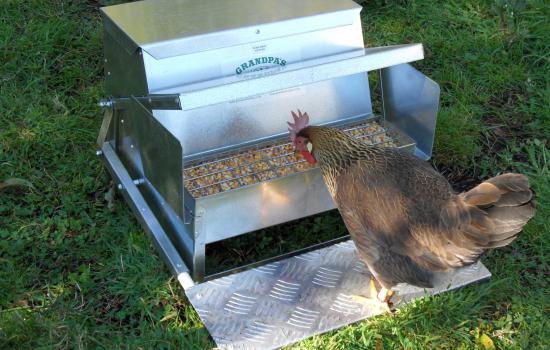
The bird steps a pedal, the door opens, they eat with their head inside, and when they step off it closes. Barely a pellet gets scratched out and rodents can't get in at night. This is the single best feeder purchase I'd make for a flock of half a dozen.
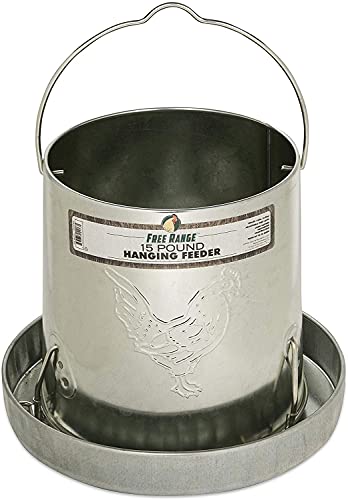
Feed drops down a tube as the birds eat, and the cover keeps the bulk dry. It's cheap, it's reliable, and hanging it at chest height keeps the bedding and poop out. This is what most people should actually buy.
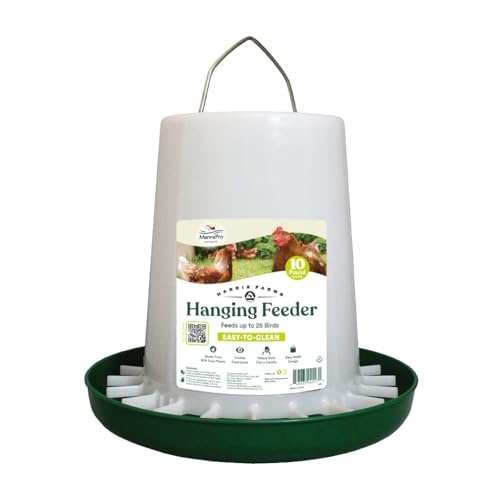
Dirt cheap and classic — and the biggest waste machine in the hen house. Fully open to poop, rain, mud, and rodents. Honestly, the only use I'd give it is as a treat or scratch bowl you take inside at night.
A 5-gallon bucket with holes near the base and a tray screwed on works way better than you'd expect, and it's the “I'd rather spend the money on real feed” option. The con? It only helps if you build it right.
Beyond the Feeder (the rest of no-waste)
- Match the feed to the birds. Layers get layer feed (extra calcium); a flock on the wrong feed wastes it because they won't eat what they don't need. Compare layer feeds on Amazon →
- Feed at chest height. A feeder on a stand or hanger keeps bedding and poop out, which keeps feed edible longer.
- Store feed airtight and rodent-proof. A torn bag in the shed is a $25 mouse motel. Pick a metal storage container on Amazon →
- Don't overfill. A little feed eaten completely beats a big pan that goes stale. Fill for a day or two at a time.
- Scratch in the evening, not the morning. Evening scratch gives the birds calories to burn overnight and stops them wasting the morning layer feed on treats.
The No-Waste Checklist
- Treadle or a gravity/hanging feeder with a metal tray — no open pans for day-to-day feed.
- Feeder raised to chest height (6–8 in off the floor for standard hens).
- Airtight, rodent-proof feed storage outside the coop.
- Feed matched to your birds — layer feed for layers, and bump protein through molt.
- Check weekly for damp or stale build-up, and clean the tray when it's dirty, not when it's convenient.
Feed Math That Pays
No-waste matters more than the price of the feeder. Run your flock size through our free flock planner and the egg-and-feed math runs itself — it usually pays for a treadle feeder by the end of one winter.
Disclosure: this post contains affiliate links; we may earn a commission at no cost to you.