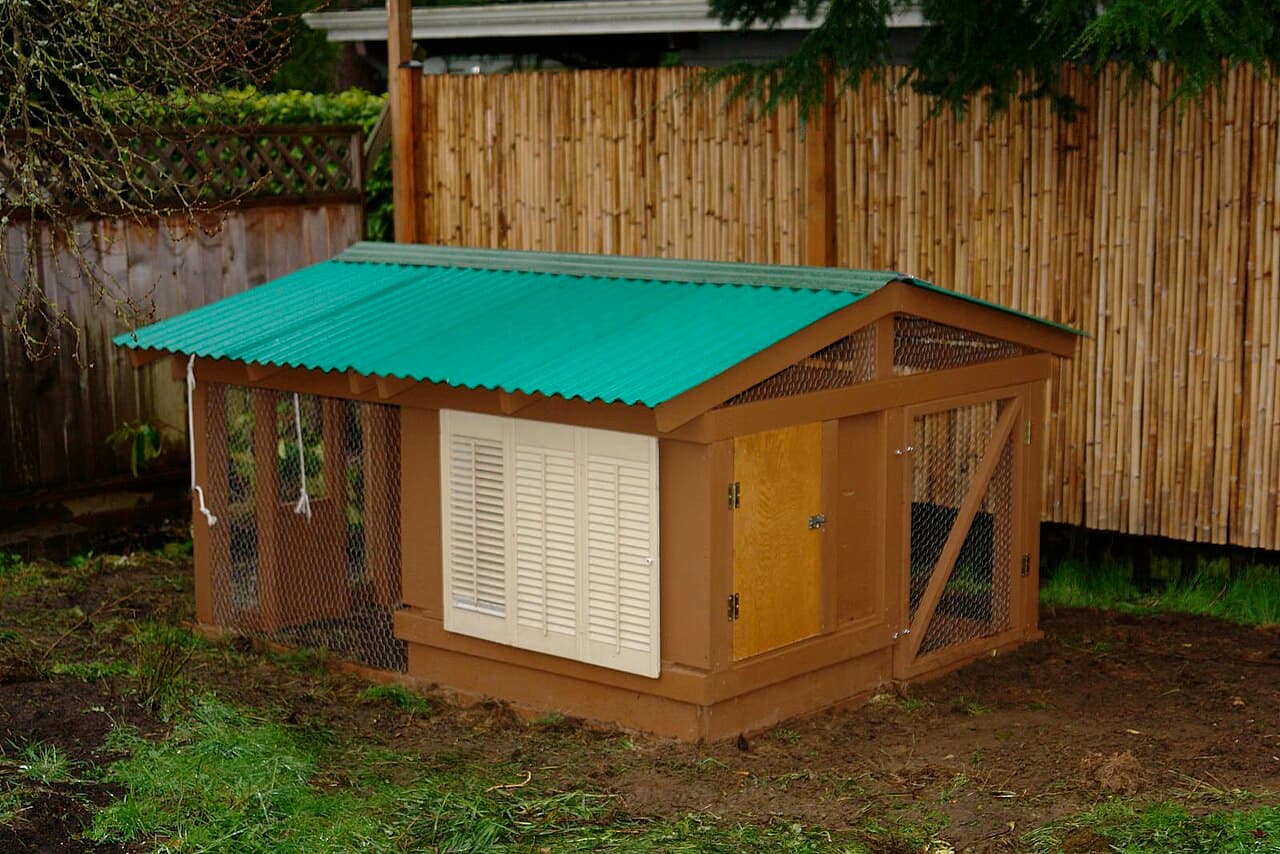
A small backyard is not a dealbreaker for keeping chickens. Suburban lots across the country host happy, healthy flocks of three or four birds in coops no bigger than a garden shed. The trick is picking a coop built for the job: compact footprint, real predator protection, and a layout you can clean without contorting.
What to Look For in a Compact Coop
- Space per bird. Plan on at least 4 square feet of coop floor and 8 to 10 square feet of run per hen. Three birds want a coop around 12 to 16 square feet, with room to roam. Cramped birds get cranky, pick at each other, and stop laying.
- Predator-proofing. Raccoons, foxes, and neighborhood dogs are the real test. Look for half-inch hardware cloth over every vent, a latch a raccoon can’t open (they’re clever with their fingers — use a carabiner or padlock), and a solid floor or buried skirt so nothing digs in.
- Cleaning access. A door you can reach through, a dropping board, or a tray you can pull out makes the difference between a weekly ten-minute job and a quarterly ordeal. Prioritize this — you will clean this coop for years.
- The run. A run attached to the coop means you can let the birds out even when you’re at work. If the coop comes without one, budget for adding a run or a moveable pen.
The Picks, With the Pros and Cons
A weatherproof, predator-resistant coop with an app: the door opens at dawn, closes at dusk, and you can check on your girls from anywhere. It ships flat, assembles in about an hour, and its seamless materials make cleaning a wipe-down job. Built for exactly this scenario — a small yard with no time to babysit a coop.
The classic backyard coop: a raised, insulated wooden house with a small attached run. It fits a corner of the yard, keeps hens dry and warm, and looks like a tiny barn instead of a machine.
A lightweight coop on wheels that you drag across the lawn a few feet every day. The hens get fresh grass, bugs, and fertilizer distribution, and you never have to clean out a muddy run.
Should You Buy or Build?
A well-built DIY coop from pallets and salvaged lumber can be genuinely good — I’ve seen one hold a flock of five through a Carolina winter. The honest version: it’s a three-weekend project, and the predator-proofing and cleaning access you get from a purpose-built coop are harder to fake. If your time is worth more than the difference, buy. If you enjoy the build and have the weekends, build — but budget for hardware cloth, not just lumber.
Before You Buy
Measure your space and check local rules first — many towns cap flock size or require a set distance from property lines. Then run the numbers: use our coop-size calculator to size the coop to your flock, and the flock planner to see what three hens will actually produce. And if you’re still deciding on breeds, the cold-hardy breeds guide is a good place to start.
Disclosure: this post contains affiliate links; we may earn a commission at no extra cost to you.