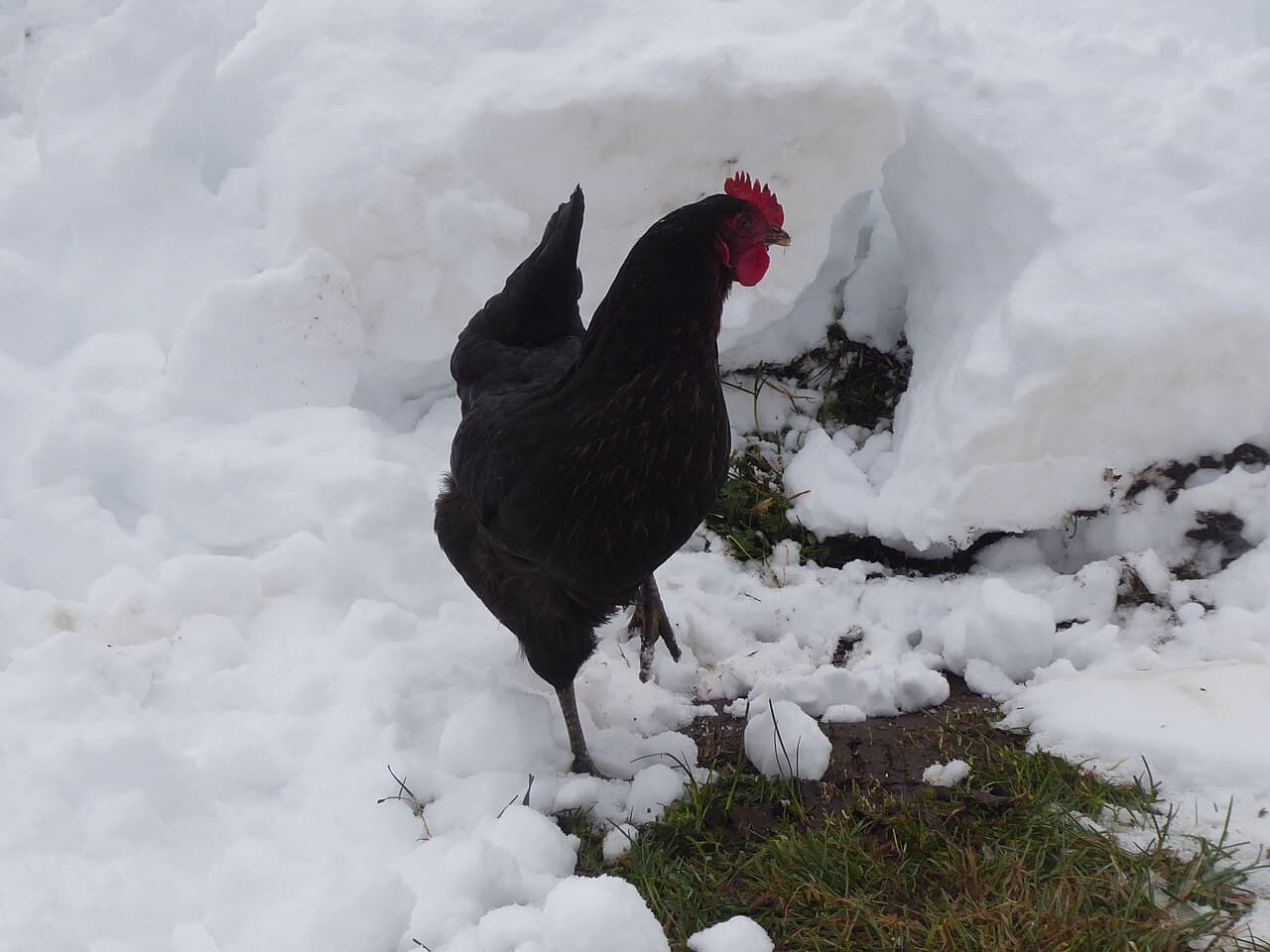
Here’s the thing about chickens and winter: the birds don’t die of cold. They die of frostbite, draft, and damp — usually in that order. A hen can stand twenty below on a dry, still night and come through fine. The same hen in a damp, drafty coop at twenty above will come out with blackened comb tips and a case of pneumonia. So the real winter question isn’t “which chicken.” It’s “which chicken, in which setup.”
That question is worth answering now, in the fall of 2026, before the cold snaps actually start landing. Genetics matter more than people give them credit for. The breeds below were built for northern winters — some of them literally invented for it.
The Traits That Actually Matter
Cold-hardiness is not a feeling, it’s a list of physical features:
- A small comb and wattles. Frostbite hits the exposed tissue first. Breeds with pea, cushion, or rose combs keep their heat in their body instead of hanging it outside in the weather.
- Dense, tight feathering. Feathers are insulation — the more of them, and the tighter they lie, the better the bird holds warmth. A heavy layer of fluff doesn’t hurt either.
- Body mass. Bigger birds carry more heat. A six-pound Brahma shrugs off cold that would slow a three-pound Leghorn to a crawl.
- A calm disposition. Sounds silly, but excitable breeds burn energy and lose condition in confinement months. Steady birds coast through winter on the same feed they eat in July.
The Breed Lineup, Cold-Climate Edition
Chantecler — the only breed ever developed in Canada, and it shows. The Trappist monks at Oka Abbey, Quebec, spent the 1900s and 1910s building it for one job: laying through harsh Canadian winters. It has a small cushion comb that shrugs off frostbite, dense feathers, and a genuinely good reputation for winter laying. The con? It’s rare, so chicks cost more and take searching.
Buckeye — bred in Warren, Ohio, in the 1890s and 1900s by Nettie Metcalf, the first American woman to create a recognized breed. It’s the only American breed with a pea comb and yellow skin, and it’s famously hardy, foraging well in cold yards. The honest con: another heritage rarity, so availability is patchy.
Dominique — America’s oldest standardized breed, around since the colonial era. Rose comb, black-and-white barred plumage, tough as a work boot. Winter-hardy, calm, and dual-purpose. The con? Eggs are medium rather than large, which matters if you sell by the dozen.
Rhode Island Red — the reliable workhorse, cold-hardy with a rose comb (the single-comb strain is frostbite-prone by comparison). Lays well through winter, tolerates confinement, and is the breed most beginners should start with in a cold climate.
Barred Plymouth Rock — the other New England classic: rose comb, dense feathers, calm to a fault. Handles cold and confinement beautifully and lays a steady stream of large brown eggs.
Silver-Laced Wyandotte — a rose-combed American breed from the late 1800s, built for cold, and arguably the prettiest cold-hardy option you can keep. Durable and a good layer, though it can be a bit bossy in mixed flocks.
Black Australorp — holds the world egg-laying record, set in a climate with genuine winter. Tight feathering, a smallish comb, calm temperament, and cold tolerance that surprises people who only know it as a heat-country bird.
Jersey Giant — the heaviest standard breed in the world, and mass is a winter survival feature. Calm, quiet, cold-tolerant. The con: eats noticeably more and takes longer to mature than the others on this list.
What about the rest? Silkies, Polish, and the showy feather-footed breeds look frosty-cute but are the wrong tools for a serious winter — exposed combs, loose feathering, and size that loses heat fast. Keep them as pets if you love them, but pick the lineup above if you want eggs in January.
The Management Side (This Is Half the Battle)
Breed choice gets you maybe forty percent of the way. The rest is the coop:
- Ventilate above the roost, not at bird level. Moisture from breathing is the real winter killer — it freezes into frost on combs and wet litter breeds disease. Airflow up high clears the moisture; drafts at roost level chill the birds. You want the former, never the latter.
- Use the deep-litter method. A thick, dry bedding layer that composts slowly from underneath gives off a little heat and keeps the floor dry. Add fresh litter on top through the winter; clean it out in spring.
- Water is the daily chore that decides everything. Heated waterers or twice-daily fresh water beat chipping ice. A hen that can’t drink won’t eat, and a hen that won’t eat can’t keep warm.
- Keep combs dry. Frostbite happens on wet combs in cold drafts. Dry, well-ventilated coops prevent more frostbite than any balm ever cured. If you do get early frostbite, a thin smear of petroleum jelly on the comb can help — but fix the coop first.
- Feed a little extra in deep cold. Birds burn calories staying warm. Free-choice feed, and a warm wet mash on the worst mornings, keeps condition through a cold snap.
The Bottom Line
There is no such thing as an unkillable winter chicken — but there is a very reliable formula: a small-combed, dense-feathered, substantial breed, in a dry, draft-free, well-ventilated coop, with water that never freezes. The monks at Oka proved it a century ago, and it’s still the formula for the 2026–27 winter.
Building the coop for your climate? The FlockPlanner coop-size calculator shows exactly how much space your winter flock needs, and the flock planner can suggest the right breeds for your setup.
Disclosure: this post contains affiliate links; we may earn a commission at no cost to you.