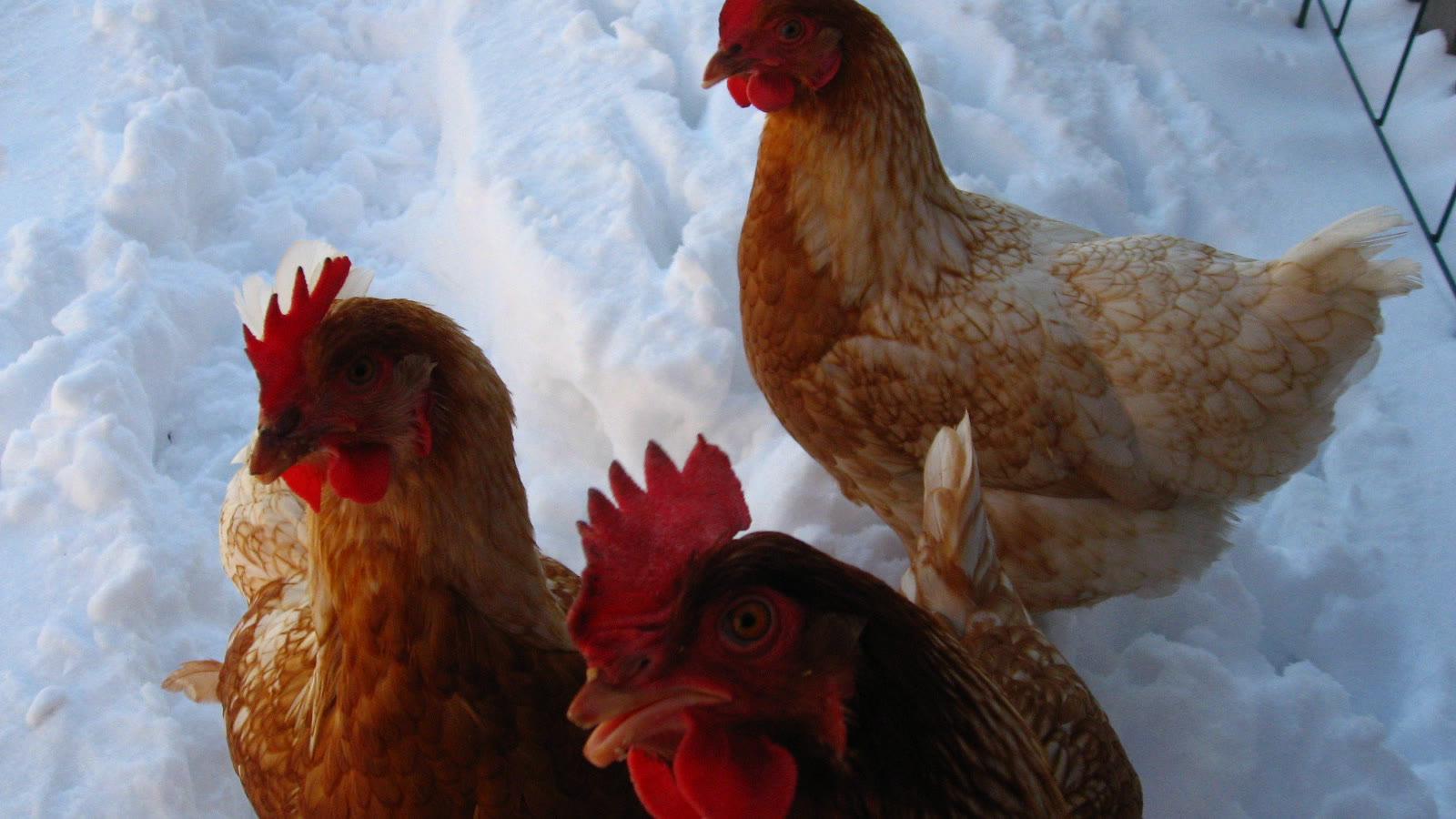
The morning I learned what really limits a winter flock, it was nine degrees outside and the water fount was a solid block of ice. I did what everyone does: I filled a jug with hot water, chipped the ice out with a screwdriver, and felt like a good hen keeper. Then I stood there for ten minutes and watched eight hens ignore it. Not one of them came down to drink.
By that evening two of them had gone off feed, and one had a pale, dry comb. Nothing was wrong with the feed in the hopper. The problem was that a hen who is not drinking is a hen who is not eating, and a hen who is not eating is a hen who cannot stay warm. Nobody freezes to death in a dry, draft-free coop. They go downhill because they stop eating and drinking, and the cold just makes it faster.
So this is not really a post about treats. It is a post about calories and water, and the treats are the part everybody asks about, so let us do both properly.
Winter Is an Energy Problem
A chicken runs a body temperature of about a hundred and five degrees Fahrenheit, which is higher than yours, and she holds it in the wind at nine degrees. That costs calories. There is no way around this except feeding her more of them.
Which means her intake goes up as the temperature goes down, and that is normal and healthy. A hen that eats noticeably more in January is not overfed, she is working. What matters is what those extra calories come in the form of.
The base has to stay the base. A complete layer ration at sixteen to eighteen percent protein is formulated so that a hen eating her fill gets the protein, the calcium, the phosphorus, and the vitamins she needs for eggs and for feathers. If she eats thirty percent more of a complete ration in the cold, everything scales up together and she is fine.
If she eats thirty percent more of corn, she gets energy and very little else, and everything else gets diluted. That is the whole trap of winter feeding, and it is why the scratch bag is the most misunderstood bag in the feed store.
The Scratch Rule, and Why It Is a Rule
Scratch grains are cracked corn, wheat, and oats, and they are the chicken equivalent of a plate of fries. Cheap, warming, popular, and not a meal. Cracked corn runs around eight or nine percent protein against the sixteen to eighteen percent in a layer ration, and it carries almost none of the calcium a laying hen needs to build a shell.
The number I use comes straight from extension guidance: scratch should be ten to fifteen percent of the flock’s daily intake, or roughly what they will clean up in about twenty minutes. Not a scoop per bird. Not a full feeder. A scattered handful in the litter, once a day, in the afternoon.
What happens when you go past that is boring and consistent. The hens fill up on corn, eat less ration, and within a couple of weeks you have fewer eggs, thinner shells, and a bird or two pulling feathers off a flockmate looking for the protein she stopped getting. The feathers come back in spring. The habit is harder to break.
One exception worth knowing. In a genuine cold snap — single digits, wind, a week of it — feeding scratch in the last hour before roost is useful, because the digestion of that grain overnight is real heat for the bird at four in the morning when she needs it most. Give it in the litter so they have to scratch for it. The exercise warms them and turns the bedding, which is the same mechanism the deep litter method runs all winter.
The Treats That Are Actually Fine
Here is the short list I would defend. The rule across all of it: treats together stay under about ten percent of the daily diet, and everything below is a supplement to the ration, never a replacement.
Dried or live mealworms. The best of the lot. High protein, high fat, and every hen in the yard will fight over them. A small handful for a flock of six, a few times a week. Live ones are better received and slightly better nutritionally, dried ones keep forever in a tin.
Black soldier fly larvae. Same idea, higher calcium than mealworms, which is a real advantage for layers. This is the one I would pick if I could only pick one.
Scrambled or hard-boiled egg, crushed shell and all. Sounds grim and it works. Cooked egg is a near-perfect protein, and hens do not develop an appetite for their own fresh eggs from eating cooked ones — that old warning applies to raw egg left in the nest, not to a scrambled egg in a dish.
Leafy greens, hung up. Cabbage, kale, chard, spinach, lettuce that bolted. Hang a whole cabbage on a string at head height and it is food and entertainment for an afternoon, which matters in a week when the run is frozen and nobody can dig.
Winter squash and pumpkin, split open. Seeds included. Good for them, cheap in November, and the seeds are a natural dewormer in the folklore sense and a decent fat source in the real sense.
Whole grains scattered, in moderation. See the rule above. This is a treat, not a feed.
Bread and pasta. Everyone’s grandmother did it. It is not poison and it is not food either — it is empty calories that fill a hen up on nothing. If you feed it, feed very little, and never mouldy.
The Things I Would Not Feed, Ever
This list is shorter than the internet’s and I stand behind all of it.
- Avocado. Persin, in the flesh and especially the skin and pit, is genuinely toxic to birds. This one is not a maybe.
- Chocolate, coffee, and anything with caffeine. Same compounds that make them dangerous to a dog.
- Mouldy feed or mouldy anything. Mycotoxins cause liver damage and a slow decline that looks like a dozen other things. Never scrape the mould off and feed the rest.
- Anything very salty. Chips, cured meat, leftover takeaway. Salt poisoning in poultry is fast and ugly.
- Raw potato and green potato skins. Solanine. Cooked potato is fine, raw and green is not.
- Rhubarb leaves and tomato/potato foliage. The foliage is the toxic part of those plants, not the fruit.
- Alcohol. Obvious, and people do it anyway.
- Raw dried beans. Haemagglutinins. Long-cooked beans are fine, dry beans straight from the jar are not.
The honest note: a hen that eats a crumb of something on this list once will almost certainly be fine. The list is about not making any of it a habit, and about not leaving a plate out where eight birds can commit to it together.
Water Is the Part That Actually Decides Your Winter
If you take one thing from this post, take this. A laying hen drinks roughly twice what she eats, and in cold weather she drinks less because the water is unpleasant and because she is less active. Drop her water intake and she stops eating before she starves, and production falls off a cliff before anything else looks wrong.
So the water gets checked twice a day, not once. Warm water in the morning gets them drinking, which is most of the battle. Never let it sit frozen through the day — a hen can go a shockingly long time without food and not nearly as long without water. A black rubber bowl in the sun thaws faster than anything else and does not crack.
Two more things that are not food and are not optional. Grit, because a hen has no teeth and whole grains and treats need to be ground in the gizzard — insoluble grit, offered free-choice and permanently. And oyster shell, separately from the ration, because that is the calcium for shells and a hen on a lot of scratch is a hen short on it. Two little hoppers on the wall, always full, and both problems stop happening.
The Bird That Was Built for This
There is a breed that answers this whole post, and almost nobody keeps it.
In 1896, in Warren, Ohio, a woman named Nettie Metcalf started crossing Barred Plymouth Rocks, Buff Cochins, and some black-breasted red games. Her goal was specific and unromantic: a bird that would lay and dress out well through the bitter Midwest winters. She called the result the Buckeye, after the Ohio state tree, because the mahogany plumage matched its seed. It was admitted to the American Poultry Association’s Standard of Perfection in 1904, and it is the only American breed known to have been developed by a woman.
What makes it relevant here is the comb. The Buckeye carries a pea comb — small, tight, and low to the head, with a fraction of the surface area of a floppy single comb. That is the cold-weather comb. Less exposed tissue means less frostbite, which is the entire argument in the frostbite post, arrived at by a breeder in Ohio a hundred and thirty years before anyone wrote it down.
It is also, in the way of good things, nearly gone. The Livestock Conservancy lists the Buckeye on its watch list, and it is in Slow Food’s Ark of Taste. If you are ordering chicks this winter and you want a bird that was designed for exactly the conditions you are reading about, that is the one.
The Picks, With the Pros and Cons
Sixteen to eighteen percent protein, formulated with calcium and the vitamins, and fed free-choice so a hen eating more in the cold gets more of everything. This is the only purchase in this post that is not optional. Buy it fresh, in fifty-pound bags, and keep it dry and off the floor so it does not mould.
High protein, high fat, and the one treat you can hand out daily without diluting the ration in any way that matters. They keep for months in a sealed tin, they do not freeze, and they are the fastest way to make a flock decide you are the best thing in the yard — which is worth something in January when you need to look at every bird up close.
The Ten-Minute Version
Keep the complete ration full and free-choice, and let her eat more of it in the cold. Scatter one handful of scratch in the litter in the afternoon, not a scoop per bird. Keep grit and oyster shell hoppers full and separate. Check and thaw the water twice a day, and make the morning water warm. Treats stay under ten percent of the diet, and mealworms beat bread every single time. No avocado, no mould, no salt, no chocolate.
Then do the arithmetic on your own flock instead of guessing at it. The flock planner sizes the flock to your household’s real egg use and shows you the annual feed bill before you buy birds, and the coop calculator tells you how many hens your building can honestly hold through a winter. The ventilation post is the other half of this one, and if you are buying a building rather than building it, the Smart Coop is our approved direct program — ten percent off with code FLOCK at smart.coop.farm/FLOCK. The honest con is the price, and the reason it earns the mention is that it vents at the top and seals at the bottom, which is the thing that stops frostbite before feed ever enters the conversation.
A hen in January is not asking you for much. Calories, liquid water, a dry place out of the wind, and something to scratch at. Get those four right and she will lay you an egg in a month when the store is charging four dollars for a dozen.
Photo: Hens in the Snow, Linda from Chicago, CC BY 2.0, via Wikimedia Commons. This post contains affiliate links and one approved partner link; we may earn a commission at no extra cost to you.
Disclosure: this post contains affiliate links and one approved partner link; we may earn a commission at no cost to you.